Alberta Road Signs: Class 7 Knowledge Test, Work Zones & 30 km/h School and Playground Zones
What is the speed limit in an Alberta school or playground zone, what does a flashing green traffic light mean, and what happens to speeding fines in a construction zone when workers are present? Alberta school zones are generally 30 km/h on school days during the posted zone times, while playground zones are generally 30 km/h from 8:30 a.m. to one hour after sunset every day, unless local signs set different times. Speeding fines are doubled in construction zones when workers are present. Alternating amber lights on a school bus mean be ready to stop; flashing red lights mean stop as required. Alberta uses a Graduated Driver Licensing (GDL) system, and the Class 7 knowledge test has 30 multiple-choice questions with 25 correct answers required to pass and may be taken once per day at a registry agent office.
Alberta roads stretch from Calgary's urban interchange network north through Edmonton's Henday loop, east on the Trans-Canada to Medicine Hat, and north on Highway 2 through Red Deer. Alberta operates a Graduated Driver Licensing (GDL) program: Class 7 Learner after the knowledge test, Class 5-GDL Probationary after the road test, then full non-GDL Class 5 after meeting the probationary requirements. Since April 1, 2023, an advanced road test is not required to exit GDL. The Class 7 knowledge test has 30 multiple-choice questions, requires 25 correct answers to pass, and can be taken once per day at a registry agent office.
2. Road Sign Shapes and Colours in Alberta
The Alberta Driver's Guide uses sign shape, colour, symbols, and wording to distinguish regulatory, warning, construction, school, and guide signs. On Highway 2 between Calgary and Edmonton, on mountain approaches along the Trans-Canada, or on rural county roads, shape and colour register before text is readable. Know these Alberta road sign shapes and meanings before your Class 7 knowledge test.
Shape
Diagram
Meaning
Example Sign
Octagon (8-sided)
STOP. come to a complete stop, wheels fully stopped, check all directions, then proceed when clear
Triangle (inverted)
Yield slow down, check traffic; if clear proceed, if not stop and wait until safe to go
Diamond
Hazard ahead; slow down, stay alert, and be ready to stop or steer
Rectangle (vertical)
Regulatory instruction or restriction; obey the posted requirement
Rectangle (horizontal)
Informational sign; read it and use it to navigate or plan your route
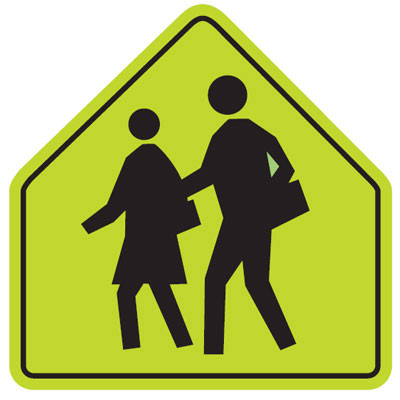
Pentagon (5-sided)
School area or zone; watch for children and obey any accompanying maximum-speed sign
Diamond (orange)
Construction, maintenance, or temporary work-zone condition; slow down and obey the posted direction or warning
Square (blue)
Motorist services nearby; exit if you need fuel, food, or medical care
Square (brown)
Park or scenic area ahead; follow directional signs to reach it
3. Alberta Regulatory Signs
Regulatory signs carry legal force under Alberta traffic law. Violations may result in fines and, depending on the offence, demerit points. A Class 5-GDL licence is suspended at 8 demerit points, and a driver must be suspension- and demerit-free for the final 12 months before exiting GDL. White rectangular signs, prohibitory signs, designated lane signs, and permissive and prohibitive signs are all tested on the Class 7 knowledge exam.
STOP Sign
Come to a full stop and yield before proceeding
YIELD Sign
Slow down and give right-of-way; stop if needed before proceeding
Speed Limit Sign
Do not exceed this speed; adjust for road and weather conditions
Do Not Enter Sign
Entry prohibited; turn around or find an alternate route
Wrong Way Sign
You have entered a one-way road against traffic
No U-Turn Sign
U-turns are prohibited at this location
No Left Turn Sign
Do not turn left here; continue straight or turn right
No Right Turn Sign
Do not turn right here; continue straight or turn left
One Way Sign
All traffic flows one direction; do not enter going the wrong way
Keep Right Sign
Move to the right side of the island or obstruction
Do Not Pass Sign
Do not overtake any vehicle ahead until passing is permitted again
No Turn on Red Sign
Wait for a green signal before turning; do not turn on red
No Left Turn on Red Sign
Wait for green before turning left; no turn on red permitted
No Right Turn on Red Sign
Wait for green before turning right; no turn on red permitted
Turn Left Only Sign
You must turn left from this lane; going straight is not allowed
Turn Right Only Sign
You must turn right from this lane; going straight is not allowed
Straight or Turn Right Sign
From this lane you may only go straight or turn right
Minimum Speed Limit Sign
You must drive at least this speed; move right if driving slower
Slower Traffic Keep Right Sign
Move to the right lane if you are driving slower than traffic
No Parking Sign
Parking prohibited here; find a legal parking area nearby
No Trucks Sign
Trucks prohibited on this road; use an alternate truck route
No Bicycles Sign
Cyclists must not enter; use an alternate route
No Pedestrian Crossing Sign
Pedestrians must not cross here; use the nearest crosswalk
Reserved Parking Sign
Park here only if you qualify; others must find a different spot
Four Way Stop Sign
Stop completely, then take turns in order of arrival
Stop Except Right Turn Sign
Traffic must stop except for the permitted right-turn movement; right-turning traffic must still yield as required
Left Turn Yield on Green Sign
Yield to all oncoming traffic before completing your left turn
Lane Use Control Sign
Follow the sign; only the shown movement is permitted from this lane
Restricted Lane Ahead Sign
Check eligibility before entering; unauthorized use is a violation
4. Alberta Warning Signs
Yellow diamond-shaped warning signs alert you to hazards ahead. they do not prohibit anything, but ignoring them causes accidents. Common on rural Alberta highways through the Alberta foothills, mountain, and northern rural highway corridors.
Left Curve
A curve to the left is ahead; reduce speed
Right Curve
A curve to the right is ahead; reduce speed
Sharp Left Turn
A very sharp left turn is ahead; slow down
Sharp Right Turn
A very sharp right turn is ahead; slow down
Winding Road
Multiple curves ahead; reduce speed and stay in your lane throughout
Set of Curves (Left-Right)
Multiple curves ahead curving left then right; reduce speed
Set of Curves (Right-Left)
Multiple curves ahead curving right then left; reduce speed
Sharp Turns (Left-Right)
Successive sharp turns ahead; slow down significantly
Slippery When Wet
Wet road is slippery; reduce speed and increase following distance
Deer Crossing
Animals frequently cross here; slow down and scan both sides of the road
Pedestrian Crossing
Crosswalk ahead; yield to any pedestrian in or entering the crosswalk
Bicycle Crossing
Cyclists cross here; slow down and yield before proceeding
School Area / Zone
Children may be present; obey any accompanying maximum-speed sign and posted zone times
School Crossing Ahead
School crosswalk ahead; yield to crossing guard and children
Divided Highway Begins
Road splits ahead; keep right and stay in your lane
Divided Highway Ends
Two-way traffic resumes ahead; stay right and watch oncoming traffic
Merging Traffic
Traffic is merging from another lane; adjust speed to allow safe entry
Added Lane
An additional lane begins ahead; traffic entering from the side has its own lane
Lane Ends Ahead
Your lane ends soon; check mirrors, signal, and merge now
Lane Ends Merge Left
Your lane ends; signal and move left before the lane disappears
Left Lane Ends
Left lane ends ahead; signal and move right before it closes
Road Narrows
Road gets narrower ahead; stay centered and reduce speed
Narrow Bridge Ahead
Bridge is narrower than the road; slow down and stay centered
Low Clearance
Overhead clearance is restricted; do not proceed if your vehicle is too tall
Hill / Steep Grade (Downgrade)
Steep hill ahead; reduce speed now and use a lower gear if needed
Bump
A bump is ahead; reduce speed before reaching it
Dip
Dip in the road ahead; reduce speed to avoid bottoming out
Loose Gravel
Loose gravel on road; reduce speed and increase following distance
Pavement Ends
Paved surface ends ahead; slow down before the surface changes
Shoulder Drop Off
Edge of road drops steeply; stay away from the shoulder
Watch for Ice on Bridges
Bridge may be icy; reduce speed and avoid sudden braking or steering
Two Way Traffic Ahead
Divided road ends; move to the right and watch for oncoming traffic
Cross Road
Intersection ahead; slow down and scan left and right before crossing
Cross Traffic
Traffic crosses from both sides; slow down and be ready to yield or stop
T Intersection
Your road ends ahead; slow down and prepare to turn left or right
Side Road
A side road joins ahead; watch for vehicles entering from the right or left
Highway Intersection Ahead
A major intersection is approaching; reduce speed and be ready to yield
Road Entering Curve
A road merges on a curve ahead; watch for vehicles entering
Roundabout
Yield to traffic already in the roundabout; then enter and keep right
Truck Rollover
Trucks must slow significantly; high rollover risk on this curve
Weave Area
Lanes are entering and exiting; stay alert, check mirrors, and adjust speed
Advisory Speed
Recommended speed for the curve or condition ahead; reduce speed appropriately
Traffic Signal Ahead
A traffic light is ahead; reduce speed and be ready to stop
5. Guide Signs and Highways in Alberta
Guide signs do not regulate driving. they show destinations, distances, and services. Green = highway navigation. Blue = motorist services. Brown = parks and recreation.
Alberta Provincial Highway Marker
You are on an Alberta provincial highway; note the number
Secondary Highway Marker
You are on a secondary highway; note the number for navigation
Exit Sign (Exit Only)
This lane leads to the exit; move out of it if you are not exiting
Kilometre Marker
Marks your location on the route; note it for emergency or navigation use
Services Sign
Services available at next exit; move right if you need to stop
Hospital Sign (H)
Hospital is nearby; follow signs if you need emergency care
Diesel
Diesel fuel available ahead; exit if your vehicle needs it
Park / Recreation Sign
Park or recreation area nearby; exit and follow directional signs
6. Traffic Signals in Alberta
Flashing red is treated like a stop sign. Flashing yellow is treated like a yield sign. Alberta also uses a flashing green traffic light: drivers may proceed straight, turn left, or turn right without stopping because opposing traffic faces red, but they must still yield to pedestrians and vehicles lawfully in the intersection.
Alberta lane reversal signals: a solid red X means do not enter or remain in that lane; move safely to a lane showing a downward green arrow. A downward green arrow means you may travel in that lane. These signals are used on reversible lanes where the direction of traffic can change.
Standard Traffic Lights
Steady Red
Stop completely; unless a sign prohibits it, a right turn on red is allowed after stopping and yielding, and a left turn on red is allowed only from a one-way street onto a one-way street
Steady Yellow
Prepare to stop; stop before the stop line or crosswalk unless you are too close to stop safely
Steady Green
Proceed through the intersection; when turning left, yield to oncoming traffic, and when turning, yield to pedestrians in the crosswalk
Green Arrow with Green Light
You may proceed without yielding in the arrow direction; movements permitted by the solid green light may also proceed when safe and legal
Green Arrow with Red Light
Proceed without stopping only in the direction of the green arrow
Opposing Traffic Extended Green
Oncoming traffic still has green; wait and do not turn left yet
Flashing Signals
Flashing Red
Treat as a stop sign; stop fully, then proceed when safe and clear
Flashing Yellow
Proceed with caution after yielding to pedestrians and other vehicles within the intersection
Flashing Red Beacon
Treat the overhead beacon as a stop sign
Flashing Green Light
Proceed straight, left, or right without stopping; opposing traffic faces red, but yield to pedestrians and vehicles lawfully in the intersection
Pedestrian Signals
WALK / White Walking Figure & DONT WALK / Orange Hand
White figure = cross now; orange hand = do not start crossing
Flashing Orange Hand + Countdown
Crossing phase ending; finish if started, do not begin
Key test point: Flashing red = stop sign. Flashing yellow = yield sign. Flashing green = you may proceed straight, left, or right without stopping while still yielding to pedestrians and vehicles lawfully in the intersection.
7. Alberta Pavement Markings
Yellow lines separate traffic moving in opposite directions. White lines separate traffic moving in the same direction. Alberta pavement markings also identify passing zones, lane-use restrictions, crosswalks, stop lines, reserved lanes, arrows, and other road symbols.
Line Colors
Yellow lines
Separate opposing traffic; single or double solid yellow lines normally mean passing is not permitted, except that a single solid yellow line may be crossed to pass within an urban area when it is safe
White lines
Separate traffic moving in the same direction
Line Types
Broken yellow line (Single)
You may pass on your side if it is safe and clear ahead
Solid yellow + broken yellow
Pass only from the broken-line side when it is safe; do not pass from the solid side
Double solid yellow lines
Passing is not allowed in either direction; stay in your lane
Broken white line
You may change lanes if it is safe; always check mirrors and signal first
Solid white line
Lane changing is not permitted across a solid white lane line
Double solid white lines
Do not change lanes here; stay in your current lane
Center Turn Lane
For left turns only; signal, enter the lane, and turn; do not use it to travel
Center Turning Lane (sign)
For left turns only; signal, enter, and turn; do not drive through it
Pavement Symbols & Special Markings
Arrows in lane
You must follow the arrow direction from this lane
Stop line (wide white bar)
Stop completely behind this line; do not roll past it
Stop Here on Red
Stop at this painted line; do not inch forward past it
Crosswalk lines
Pedestrian crossing zone; always yield to pedestrians here
Broken white line (pavement)
You may change lanes if it is safe; check mirrors and signal first
Solid white line (pavement)
Lane changing is not permitted across a solid white lane line
Double solid white lines (pavement)
Do not change lanes here; stay in your current lane
Diagonal yellow lines (gore area)
Do not enter or drive through this area; it is off-limits to traffic
Bicycle lane marking
Reserved for cyclists only; do not drive or park in this lane
Reserved Lane Diamond
The diamond identifies a reserved lane; follow the accompanying signs showing which vehicles may use it and when
Key test point: Yellow lines separate opposing traffic and white lines separate same-direction traffic. Broken lines permit crossing when safe. Solid white lane lines may not be crossed to change lanes; solid yellow lines restrict passing, with Alberta allowing safe passing across a single solid yellow line within an urban area.
8. Alberta Work Zone Signs
Orange signs with black symbols or lettering identify construction, maintenance, and other temporary work-zone conditions. Drivers must obey work-zone traffic-control devices and flag persons. In Alberta, speeding fines are doubled in construction zones when workers are present.
Road Work Ahead
Construction zone begins ahead; reduce speed and stay alert
Flagger Ahead
A person is directing traffic; obey their signals
Workers Ahead
Road workers are present; slow down and be ready to stop
Active Work Zone
You are in an active work zone; drive with extra caution
End of Active Work Zone
Work zone ends; resume normal speed and check posted limit
Lane Closed Ahead
A travel lane ends ahead; merge early
Road Closed
Road is completely closed; follow detour signs
Orange barrels / cones
Active work zone boundaries; stay within marked lanes
Channelizing devices (barricades)
Follow the barricades; do not drive through or around them
You must obey a flaggers directions even if they conflict with existing signs or signals.
Speed limits posted in work zones must be obeyed; the doubled-speeding-fine rule applies when workers are present.
Alberta doubles speeding fines in construction zones when workers are present.
Never drive through or around a closed lane barrier. wait for a flagger or follow detour signs.
Key test point: Orange signs identify construction, maintenance, utility, or other temporary work-zone conditions. Reduce speed as required and follow the posted traffic-control devices.
9. Railway Crossing Signs in Alberta
Alberta railway crossings use advance warning signs before the tracks and a red-outlined crossbuck at public crossings. The crossbuck means drivers must yield to trains, and a number plate below it indicates multiple tracks.
Crossing Gates
Lower when a train is coming; never drive around a lowered gate
Flashing Red Lights
A train is approaching; stop and wait until fully clear
Stop Line
Stop here completely when required before proceeding
Advance warning signs tell you to look, listen, and reduce speed because you may have to stop for a train.
The red-outlined crossbuck at a public railway crossing means you must yield to trains. If more than one track is present, a sign indicates the number of tracks.
Stop when a train is visible or sounding a signal and approaching within 500 metres of the crossing. At flashing red railway signals, the nearest driver must stop at least 5 metres from the nearest rail.
If a STOP sign controls the railway crossing, stop between 5 and 15 metres from the nearest rail.
Never enter the crossing unless you can clear the tracks completely. After one train passes, check every track for another train before proceeding.
Key test point: The Alberta railway crossbuck means yield to trains. When flashing red railway lights operate, stop at least 5 metres from the nearest rail and remain stopped until the signals stop and the tracks are clear.
10. Alberta School and Playground Zone Signs
What is the difference between an Alberta school zone and playground zone? A school sign with a maximum-speed sign creates a school zone; the default 30 km/h limit applies on school days from 8:00-9:30 a.m., 11:30 a.m.-1:30 p.m., and 3:00-4:30 p.m. unless different municipal times are posted. A playground sign with a maximum-speed sign creates a playground zone; the default 30 km/h limit applies every day from 8:30 a.m. to one hour after sunset, unless different times are posted. Passing another vehicle travelling in the same direction is prohibited while either zone is in effect.
School Area / Zone Sign
The school sign marks a school area; with a maximum-speed sign it creates a school zone
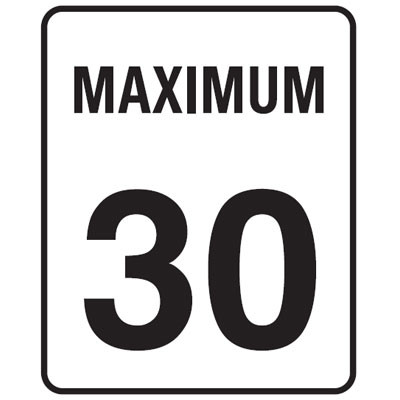
School Speed Limit
30 km/h unless otherwise posted; use the posted school-zone times, which may vary by municipality
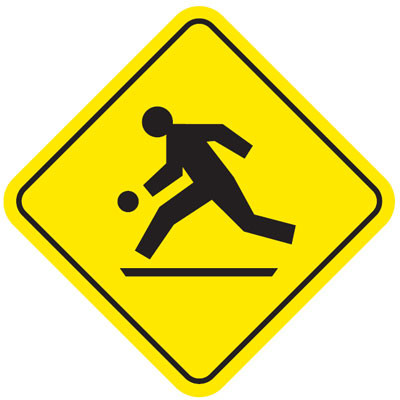
Playground Zone
30 km/h unless otherwise posted; normally in effect every day from 8:30 a.m. to one hour after sunset
School Crossing Ahead
School crosswalk ahead; yield to crossing guard and children
School-zone times are normally 8:00-9:30 a.m., 11:30 a.m.-1:30 p.m., and 3:00-4:30 p.m. on school days. Municipal bylaws may set different times, which must be posted beneath the sign.
Playground-zone restrictions are normally in effect every day from 8:30 a.m. to one hour after sunset. Municipalities may post different times.
In both school and playground zones, the speed limit is 30 km/h unless otherwise posted, and you may not pass or attempt to pass another vehicle travelling in the same direction while the zone is in effect.
Alternating amber school-bus lights mean be ready to stop. On an undivided highway, when the bus stops with alternating red lights and the stop arm displayed, traffic from both directions must stop about 20 metres from the bus.
On a highway physically divided by a median, traffic approaching from the opposite side may proceed with caution; vehicles behind the bus must stop.
Key test point: A school sign with a maximum-speed sign creates a school zone; without the speed sign it is a school area. The same zone-versus-area distinction applies to playground signs.
11. Pedestrian and Bike Signs in Alberta
Alberta crosswalks may be marked or unmarked, and pedestrians have the right-of-way in a crosswalk unless a peace officer or traffic-control device directs otherwise. Alberta does not set a province-wide one-metre passing rule for motorists in this context; drivers should leave cyclists a safe distance and pass at a moderate speed.
Pedestrian Crossing Sign
Crosswalk ahead; yield to any pedestrian in or entering the crosswalk
Bicycle Crossing Sign
Cyclists cross here; slow down and yield before proceeding
No Bicycles
Cyclists must not enter; use an alternate route
No Pedestrian Crossing
Pedestrians must not cross here; use the nearest crosswalk
Crosswalks can be marked or unmarked. Unmarked crosswalks exist at intersections unless a sign states otherwise, and drivers must stop and yield to pedestrians in the crosswalk.
When passing a cyclist, leave a safe distance and pass at a moderate speed. Check local municipal bylaws for any additional passing-distance requirements.
A dedicated bike lane is for cyclists and cannot be used by other motorists. A sharrow is a bicycle-and-chevron pavement marking for a shared-use lane, not a dedicated bike lane.
Key test point: Alberta recognizes both marked and unmarked crosswalks. Drivers must stop and yield to pedestrians in a crosswalk unless directed otherwise by a peace officer or traffic-control device.
12. How to Prepare for the Alberta Class 7 Knowledge Test
Study the shapes first. If you can identify a sign by shape alone, you have already narrowed it down significantly.
Use the official Alberta Driver's Guide. The Government of Alberta publishes the Driver's Guide for cars and light trucks covering traffic control signs, signals, pavement markings, and rules of the road.
Practice with flashcards. Quiz yourself on sign images, not just text descriptions.
Do not confuse warning and regulatory. Yellow diamonds warn; white rectangles regulate. That distinction shows up on the test.
Know school zones versus playground zones. Both are generally 30 km/h unless otherwise posted, but their default operating times are different and municipalities may post different times.
Know Alberta flashing signal rules. Flashing red = stop sign, flashing yellow = yield sign, and flashing green allows straight, left, or right movement without stopping while still yielding to lawful pedestrians and vehicles in the intersection.
Learn yellow vs white lines. Yellow = opposing traffic. White = same-direction traffic. Simple rule, frequently tested.
Know orange work-zone signs. Orange signs identify construction, maintenance, utility, or other temporary conditions; follow the posted warning or direction.
Know the Class 7 test format. The Alberta knowledge test has 30 multiple-choice questions, requires 25 correct answers to pass, and can be taken once per day.
Alberta-specific tip: Deer crossing signs are especially common on rural highways through the Alberta foothills, mountain, and northern rural corridors. slow down, these are active wildlife zones.
Looking for a quick reference to study Alberta road signs? This guide covers Alberta Class 7 road signs and meanings, from regulatory and warning signs to pavement markings, traffic signals, school and playground zones, work zones, and railway crossings. Use it as your Alberta road signs summary, Alberta printable road signs chart, or complete Alberta road sign list with meanings for your driver knowledge test prep.
Students also use this page as a Alberta road signs study guide, Alberta traffic signs cheat sheet, Alberta railway crossing signs tool, and Alberta road signs reference sheet before their Alberta Class 7 knowledge test. Whether you need a Alberta traffic signs PDF, a Alberta road signs quick review, or a Alberta Class 7 sign test study sheet, this page has you covered.
Alberta traffic signs PDF • Alberta road sign meanings PDF • Alberta Class 7 sign test study sheet • Alberta road signs study guide • Alberta road signs guide • Alberta road signs reference sheet • Alberta red X lane signal meaning • Alberta road signs quick review • Alberta driver knowledge test signs • Alberta Class 7 road signs PDF • Alberta road sign list PDF • Alberta road signs cheat sheet • Alberta printable road signs chart • Alberta road sign recognition test • Alberta flashing green light meaning • Alberta school zone vs playground zone signs
Alberta ALBERTA Questions? Get Official Answers Instantly
Official ALBERTA Sources Only
Accurate official answers for your Alberta ALBERTA journey — no outdated info.
Uses official Alberta ALBERTA data only
Built for permit test accuracy
Explains rules in plain language
Chat
Bookmarks
Sources
Hello! I'm your ALBERTA Assistant
Ask me anything about Alberta permit rules and regulations.
Learners Who Passed with Shoro
★★★★★
"The AI mock tests were surprisingly realistic. The explanations for road signs helped me understand the logic, not just memorize. Passed my permit test on the first try!"
M
Michael R.
New Driver
★★★★★
"I was struggling with the specific road rules of my state until I used Shoro. The flashcards are a game changer for quick revision before the actual exam."
S
Sarah L.
Permit Holder
★
★
★
★
★
"The readiness score gives you so much confidence. I knew exactly when I was ready to take the test. Highly recommend Shoro for anyone nervous about their exam."